


DESIBUZZCanada
Events Listings

Dummy Post

International Day Of Yoga To Be Virtually Celebrated Saturday At 4pm

CANCELLED: Coronavirus Fears Kills Surrey’s Vaisakhi Day Parade

ADVERTISE WITH US: DESIBUZZCanada Is The Most Read South Asian Publication Online

SURREY LIBRARIES: Get Technology Help At Surrey Libraries
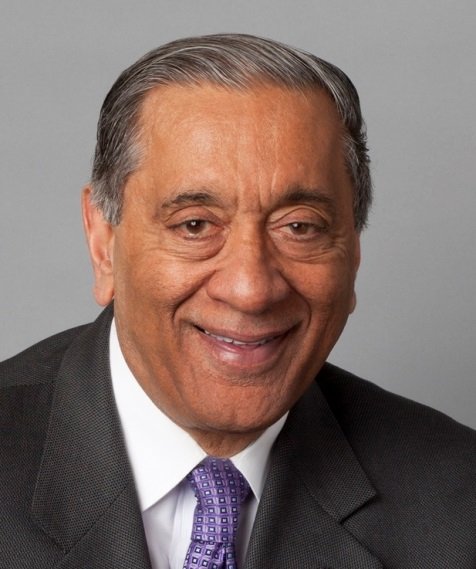
WALLY OPPAL: Surrey Police Transition Update On Feb. 26
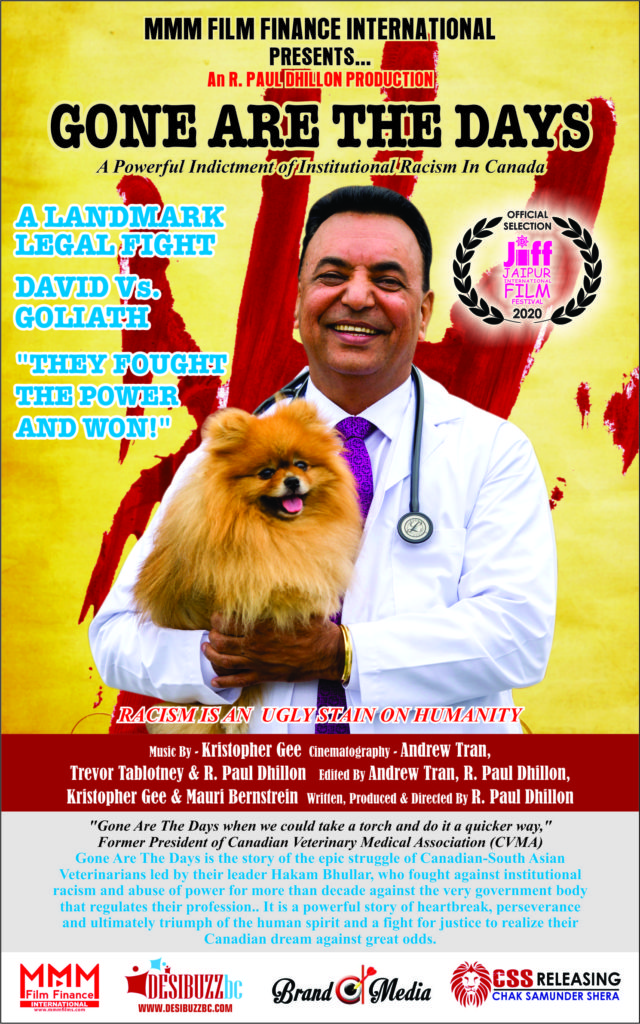
GONE ARE THE DAYS - Feature Documentary Trailer

Technology Help At Surrey Libraries

Birding Walks

Plea Poetry/short Story : Youth Contest

International Folk Dancing Drop-in Sessions
Richest 0.001% Own Three Times More Wealth Than One Half Of Humanity

By Harinder Mahil
I have been concerned about and written about income inequality for many years but did not fully realize how bad it really is. A new report released this month shows that less than 60,000 people, comprising 0.001 percent of world’s population, control three times as much wealth as the entire bottom half of humanity.
The report, authored by Ricardo Gomez-Carrera of Paris School of Economics, is the third edition of the World Inequality Report. It draws on the work of over 200 scholars from around the world. The findings of these scholars have informed national and international debates on fiscal reform, wealth taxation, and redistribution in forums from national parliaments to G20.
The authors, one of whom is the influential French economist Thomas Pokety, said that while inequality had “long been a defining feature of the global economy”, by 2025 it had “reached levels that demand urgent attention”.
Global inequality is much worse today than most policymakers realize. According to the report average education spending per child in Sub Saharan Africa stands at around just $322 Canadian, compared with $11,270 in Europe and $14,490 in North America: a gap of more than 1 to 40. Such disparities shape life chances across generations and perpetuate global wealth hierarchies.

The richest 10% of the global population, according to the latest data, own three-quarters of the world’s wealth and have more income than the rest of humanity. Within most countries, it is rare for the poorest 50% to control more than 5% of national wealth.
According to the report, “the benefits of globalization and economic growth have flowed disproportionately to a small minority, while much of the world’s population still face difficulties in achieving stable livelihoods. These divides are not inevitable. They are the outcome of political and institutional choices.”
“This concentration is not only persistent, but it is also accelerating,” the report states. “Since the 1990s, the wealth of billionaires and centimillionaires has grown at approximately 8% annually, nearly twice the rate of growth experienced by the bottom half of the population. The poorest have made modest gains, but these are overshadowed by the extraordinary accumulation at the very top.”
“The result,” the report adds, “is a world in which a tiny minority commands unprecedented financial power, while billions remain excluded from even basic economic stability.”
The report comes as the US, the world’s richest nation abandons international co-operation on climate and taxation and works to supercharge inequality by slashing domestic and foreign aid programs while delivering massive tax breaks to the wealthiest Americans.

“The choices we make in the coming years,” the report says, “will determine whether the global economy continues down a path of extreme concentration or moves toward shared prosperity.”
In a preface, the Nobel prize-winning economist Joseph Stiglitz repeated a call for an international panel comparable to the UN’s IPCC on climate change, to “track inequality worldwide and provide objective, evidence-based recommendations”.
According to the report, the evidence shows that inequalities can be reduced, by public investment in education and health and by effective taxations and redistribution programs. It notes that in many countries the ultra rich escape taxation.
Reducing inequality is a choice. The report concludes, “the tools exist. The challenge is political will.”
I urge governments and policymakers to treat this situation as an emergency before it gets any worse.

Harinder Mahil is a human rights activist and is secretary of Dr. Hari Sharma Foundation.