



DESIBUZZCanada
Events Listings

Dummy Post

International Day Of Yoga To Be Virtually Celebrated Saturday At 4pm
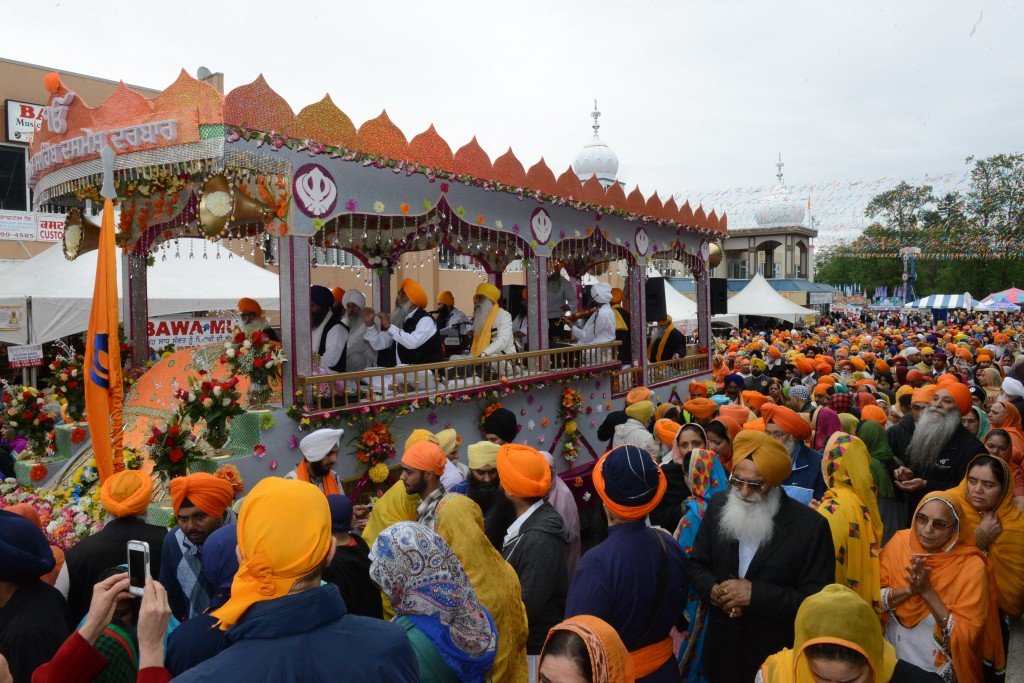
CANCELLED: Coronavirus Fears Kills Surrey’s Vaisakhi Day Parade

ADVERTISE WITH US: DESIBUZZCanada Is The Most Read South Asian Publication Online

SURREY LIBRARIES: Get Technology Help At Surrey Libraries
WALLY OPPAL: Surrey Police Transition Update On Feb. 26

GONE ARE THE DAYS - Feature Documentary Trailer

Technology Help At Surrey Libraries

Birding Walks

Plea Poetry/short Story : Youth Contest

International Folk Dancing Drop-in Sessions
Celebrating Guru Gobind Singh Ji’s 359th Birth Anniversary

By Balwant Sanghera
These days, the Sikh Sangat around the globe is celebrating the 359th birth anniversary (Parkash Purb) of the tenth Guru of the Sikh faith, Guru Gobind Singh, around the globe. Born in 1666, Guru Gobind Singh achieved so much during his 42 years on this earth that is beyond one's wild imagination. He was only nine years old when his father, Guru Teg Bahadur, the ninth Guru, made the ultimate sacrifice for human rights. His headquarters at Anandpur Sahib was surrounded by hostile Hill Chieftains who did everything in their power to drive him out. They were supported by the hostile Mughal ruler Aurangzeb and his representatives in Sirhind and Lahore. In view of this, Guru ji began to raise a formidable army to counter that threat. Guru ji's first test came in 1684 or around that time when he was forced to fight some of the Hill Chiefs in his first encounter at Bhangani in the Shivalik hills of the Himalayas. The Hill Chiefs lost and got the message. They stopped their hostilities for a while. This gave Guru ji time to build up his army and attend to other tasks he had in mind.
During his lifetime, Guru Gobind Singh fought 16 battles against the Hill Chiefs and the Mughals. These battles were against oppression, intimidation, violence, and injustice. During these battles Guru ji could have expanded his territory but that was not his intention. He did not add even an inch of territory to his domain. His fight was against human rights violations and unfair treatment of ordinary people. In this context, Guru Gobind Singh's contribution to humanity is unprecedented. Though the Mughal ruler Aurangzeb and his cronies had been responsible for the martyrdom of most of his family, yet after Aurangzeb's death, he agreed to help his son Bahadur Shah. Upon Bahadur Shah's request Guru ji agreed to accompany him on his journey to the South to suppress a rebellion. Due to some reasons, Guru ji decided to stay at Nander where he left for his heavenly abode in 1708. It was here that Guru ji dispatched Baba Banda Singh Bahadur to Punjab.

Guru Gobind Singh was an esteemed scholar. He was well versed in many languages including Gurmukhi, Brij Bhasha, Sanskrit, Persian, Arabic, Hindi and Urdu. He was a great visionary. Guru ji loved art and music. He invented the musical instruments Dilruba and Taus. Guru Gobind Singh was a master in archery. He was very fond of weapons. It has been reported that Guru ji had the most expensive and unique weapons at that time. His compositions and poetry are unmatched. Guru ji composed Jaap Sahib when he was just 19 years old. Guru Gobind Singh carried on the work begun by Guru Nanak Devji and the other Gurus. His motto was: Treat Humanity as One Race. Despite all these wonderful qualities, Guru ji was very humble as illustrated by one of his sayings:
"I am a servant of the Supreme Being and have come to behold the wonderful drama of life. Anyone who considers me as God will perish in hell".
Creation and formation of the Khalsa by Guru ji on the Vaisakhi Day in 1699 was a historic event. With this development Guru ji eliminated the caste system amongst Sikhs and made everyone equal. He also gave a distinct identity to the Sikhs. At the same time Guru ji discontinued the tradition of a human Guru. Instead, he gave this honour to Shri Guru Granth Sahib, the holy scripture of the Sikhs. Guru Gobind Singh, along with the other nine Gurus are a great credit and a beacon of hope not only for every Sikh but for the whole of humanity. Their contribution towards the welfare and betterment of humanity is remarkable and unique.
Balwant Sanghera is a retired School Psychologist and Community Activist.